Modern businesses operate with multiple departments handling finance, sales, inventory, operations, and customer relationships. As organizations grow, managing information across multiple tools can become difficult.
Many companies rely on spreadsheets, standalone applications, and manual processes that make data difficult to track and manage.
ERP software helps solve this challenge by integrating multiple business processes into a single centralized system.
Enterprise Resource Planning (ERP) systems allow organizations to manage their operations more efficiently by connecting different departments and providing real-time visibility into business data.
In this guide, we will explore what ERP software is, how it works, and why many businesses adopt ERP systems to streamline their operations.
Understanding ERP Software
ERP stands for Enterprise Resource Planning. It refers to a type of software platform that integrates multiple business processes into one unified system.
Instead of using separate applications for accounting, inventory, sales, and operations, ERP software combines these functions within a centralized platform.
This allows businesses to:
- store data in a single database
- automate workflows between departments
- generate real-time reports
- improve operational efficiency
ERP systems are widely used by companies of all sizes, from small businesses to large enterprises.
How ERP Systems Work
ERP systems operate using a centralized database that collects information from various departments within an organization.
For example:
- sales teams enter customer orders
- warehouse teams update inventory levels
- finance teams track invoices and payments
Because the information is stored within the same system, each department can access accurate and up-to-date data.
This integration reduces errors, eliminates duplicate data entry, and allows management to monitor business performance more effectively.
Key Modules in ERP Systems
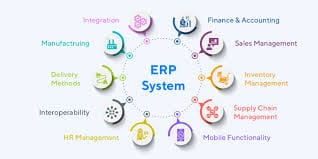
ERP software typically consists of multiple modules designed to manage different aspects of business operations.
Financial Management
The finance module manages accounting processes such as:
- general ledger
- accounts payable and receivable
- financial reporting
- budgeting
This helps companies maintain accurate financial records and generate reports for decision-making.
Inventory Management
Inventory modules track stock levels, warehouse locations, and product movement.
Businesses can monitor inventory in real time, reducing the risk of stock shortages or overstocking.
Sales and Customer Management
ERP systems often include tools for managing sales processes, customer data, and order tracking.
These features allow companies to maintain better relationships with customers and monitor sales performance.
Human Resources
HR modules help manage employee information, payroll, attendance, and recruitment processes.
Centralizing employee data improves workforce management.
Manufacturing and Production
Manufacturing companies use ERP systems to manage production planning, bills of materials, and shop floor operations.
This ensures better coordination between production and inventory management.
Benefits of ERP Software
Businesses adopt ERP systems because they offer several operational advantages.
Improved Efficiency
Automation reduces repetitive tasks and manual data entry, allowing teams to focus on more strategic activities.
Better Data Visibility
ERP dashboards provide real-time insights into operations, enabling managers to monitor performance and identify potential issues quickly.
Improved Collaboration
Since all departments work within the same system, information flows more easily across teams.
Scalability
ERP systems allow businesses to expand their operations without needing to replace their software infrastructure.
Industries That Use ERP Systems
ERP software is used across many industries.
Manufacturing
Manufacturers use ERP systems to manage production schedules, supply chains, and inventory.
Logistics and Distribution
Logistics companies rely on ERP platforms to coordinate shipments, warehouse operations, and inventory tracking.
Retail and E-commerce
Retail businesses use ERP systems to integrate inventory, sales channels, and accounting processes.
Healthcare
Healthcare organizations use ERP software to manage patient data, inventory, billing, and administrative operations.
ERP Implementation Process
Implementing ERP software typically involves several stages.
1. Business Analysis
Organizations first evaluate their processes and determine which areas require improvement.
2. System Design
ERP specialists configure the system and select appropriate modules.
3. Customization
Some companies require custom workflows to match their operations.
4. Data Migration
Existing data from spreadsheets or legacy systems is transferred into the ERP platform.
5. Testing and Training
Users test the system and receive training before full deployment.
ERP vs CRM Systems
Many businesses also use Customer Relationship Management (CRM) systems alongside ERP software.
While ERP focuses on internal operations such as inventory, finance, and production, CRM platforms primarily manage customer interactions and sales pipelines.
If you want to learn more about how these systems differ, you can read our detailed guide:
ERP vs CRM: What Is the Difference?
https://git-stack.org/post/erp-vs-crm-difference/
Understanding how ERP and CRM systems complement each other helps businesses choose the right technology for their needs.
Why Many Businesses Choose Odoo ERP
One of the most widely adopted ERP platforms today is Odoo.
Many organizations choose Odoo because it provides an integrated suite of business applications including CRM, inventory, accounting, manufacturing, and project management. Instead of using multiple disconnected tools, companies can manage operations within a single unified platform.
Odoo offers a modular system that includes applications for:
- CRM
- accounting
- inventory management
- manufacturing
- project management
- e-commerce
Businesses can start with a few modules and expand the system as their operations grow.
This flexibility makes Odoo a popular choice for companies seeking scalable ERP solutions.
How GitStack IT Solutions Helps Businesses Implement ERP Systems
Implementing an ERP system requires technical expertise and an understanding of business workflows.
GitStack IT Solutions helps organizations design and implement ERP systems tailored to their operational needs.
Our services include:
- ERP implementation and configuration
- Odoo ERP implementation
- workflow automation solutions
- system integration and customization
- ongoing support and optimization
By implementing modern ERP systems, businesses can reduce manual processes, improve efficiency, and gain better visibility into their operations.
If your organization is considering ERP implementation or Odoo integration, you can learn more about our services at:
Frequently Asked Questions
What is ERP software used for?
ERP software helps businesses manage finance, inventory, operations, and other core processes in one integrated system.
Is ERP software suitable for small businesses?
Yes. Many ERP platforms such as Odoo are designed for small and medium businesses and can scale as the company grows.
How long does ERP implementation take?
ERP implementation timelines vary depending on complexity. Small implementations may take several weeks, while larger deployments may require several month
Final Thoughts
ERP software has become an essential tool for businesses looking to streamline operations and manage complex workflows.
By integrating finance, inventory, sales, and other business functions into a unified platform, ERP systems help organizations operate more efficiently and make better strategic decisions.
As companies continue to grow and adopt digital technologies, ERP systems will play an increasingly important role in supporting scalable and data-driven operations.