Many businesses hear the terms ERP and CRM, but not everyone clearly understands the difference between the two systems.
Both ERP and CRM software help companies improve efficiency and manage important business processes. However, they serve different purposes within an organization.
Understanding how these systems work can help businesses choose the right technology to support growth, improve customer relationships, and streamline internal operations.
In this guide, we’ll explain the key differences between ERP and CRM systems, their benefits, and how businesses use them together
Many companies eventually invest in automation solutions and custom internal systems to improve efficiency and streamline operations..
What Is an ERP System?
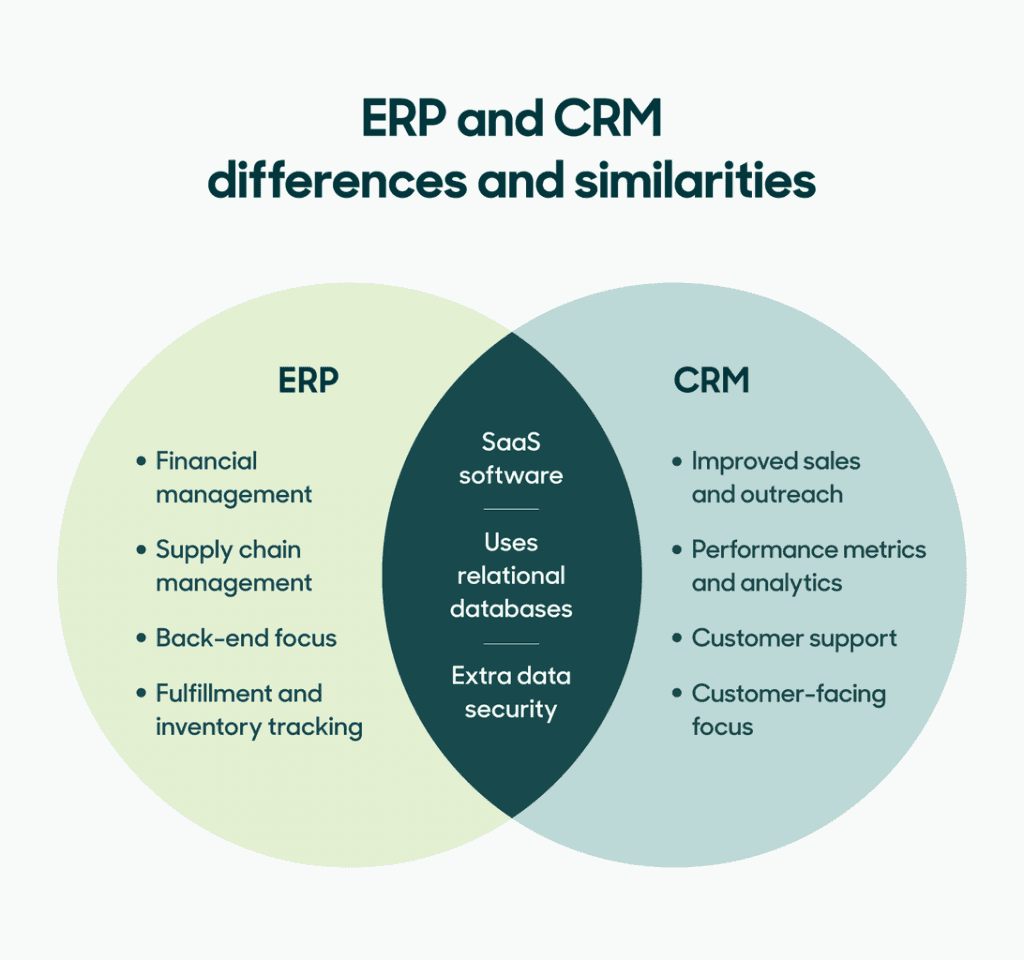
ERP (Enterprise Resource Planning) is software that helps businesses manage their internal operations.
ERP systems integrate multiple departments into one centralized platform.
Typical ERP modules include:
• finance and accounting
• inventory management
• procurement
• manufacturing
• human resources
• reporting and analytics
Instead of using separate tools for each department, ERP systems allow businesses to manage everything from a single system.
This improves data accuracy, visibility, and operational efficiency.
Businesses that require specialized features often choose custom ERP software development tailored to their operations.
What Is a CRM System?
CRM (Customer Relationship Management) software focuses on managing customer interactions and sales activities.
Many companies implement CRM platforms together with custom software solutions to automate their sales workflows.
CRM systems help businesses track and manage:
• leads and prospects
• customer contact information
• sales pipelines
• communication history
• marketing campaigns
• customer support tickets
The main goal of CRM software is to improve customer relationships and increase sales performance.
ERP vs CRM: Key Differences
Although both systems manage business data, they focus on different areas.
| Feature | ERP System | CRM System |
|---|---|---|
| Primary Focus | Internal operations | Customer management |
| Users | Finance, operations, HR | Sales and marketing teams |
| Core Function | Business process management | Customer relationship tracking |
| Data Managed | Financial and operational data | Customer and sales data |
| Goal | Improve operational efficiency | Increase sales and customer satisfaction |
ERP systems manage the internal side of the business, while CRM systems focus on the customer-facing side.
How ERP and CRM Work Together
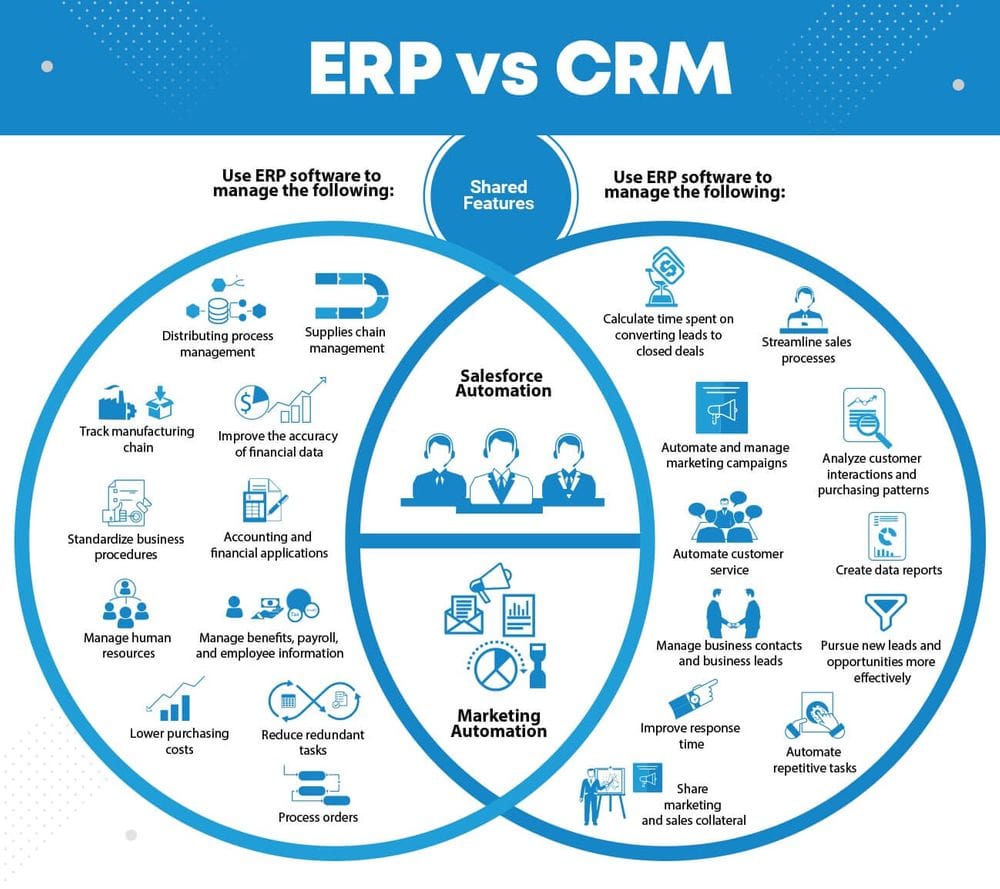
Many companies use both ERP and CRM systems to manage their operations more effectively.
For example:
• CRM captures customer orders
• ERP processes inventory and billing
• ERP manages financial reporting
When integrated, ERP and CRM systems create a complete view of the business, from customer acquisition to order fulfillment and financial reporting.
Benefits of ERP Systems
ERP software offers several advantages for growing companies:
• centralized business data
• improved reporting and analytics
• better inventory management
• streamlined financial processes
• improved operational efficiency
ERP systems are especially useful for companies with complex operations or multiple departments.
Benefits of CRM Systems
CRM platforms help businesses strengthen their customer relationships.
Benefits include:
• improved lead tracking
• better customer communication
• stronger sales pipeline management
• more effective marketing campaigns
• improved customer support
CRM systems are essential for companies that rely heavily on sales and customer engagement.
Do Small Businesses Need ERP or CRM?
Small businesses often start with a CRM system to manage leads and sales activities.
As the business grows, operational complexity increases. At that stage, many companies implement ERP systems to manage inventory, finance, and internal workflows.
Some modern platforms combine ERP and CRM capabilities into a single system.
How GitStack IT Solutions Helps Businesses Implement ERP and CRM Systems
GitStack IT Solutions provides ERP, CRM, and business automation solutions designed to help companies streamline operations and scale efficiently.
Our solutions help companies:
• implement ERP systems for internal operations
• develop CRM platforms for sales management
• integrate business workflows into centralized systems
• replace manual spreadsheets with automated platforms
These systems help businesses gain better visibility into operations while improving efficiency and scalability.
If your organization is exploring ERP or CRM systems, GitStack can help design the right solution for your business.
Final Thoughts
ERP and CRM systems both play critical roles in modern business operations.
While ERP software focuses on internal business processes, CRM platforms concentrate on customer relationships and sales management.
Companies that successfully integrate ERP and CRM systems gain a powerful advantage by combining operational efficiency with strong customer engagement.
Choosing the right system depends on your company’s size, goals, and operational complexity.